
Project background
Building on global evidence that diseases and other human-caused pressures are driving amphibian declines, the project focuses on early prevention and preparedness, consistent with 2024 national guidance from the Association of Fish and Wildlife Agencies. To date, the project team has developed a Bsal risk model and corresponding risk map for Minnesota, shared findings with the Minnesota Department of Natural Resources, and established a broad surveillance network through the Minnesota Student Network for Amphibian Pathogen Surveillance (MN SNAPS). More than 14 partners have been engaged, over 200 amphibian samples have been tested for Bd and Bsal, and educational materials have been created to support data access, coordination, and outreach.
The next phase of the project will expand and sustain statewide chytrid surveillance, refine risk models by incorporating new surveillance data and conservation priorities, and advance environmental DNA (eDNA) methods for early detection. Together, these efforts will strengthen Minnesota’s capacity to assess risk, guide conservation actions, and support rapid response planning to prevent or contain a potential Bsal introduction.
Activities:
- Sustain and expand chytrid fungi surveillance
- Integrate surveillance results and conservation priorities into the risk model
- Expand the reach of surveillance using eDNA
Phases
Phase I
Title: Surveillance and control of Chytrid fungi in Minnesota amphibians
Project Manager: Dr. Amy Kinsley, Department Veterinary Population Medicine, University of Minnesota Twin Cities
Research Team:
- Dr. Molly Bletz, Assistant Professor of Disease Ecology at Penn State
- Dr. Dan Grear, Wildlife Disease ecologist at the US Geological Survey
- Dr. Jen Y. Lamb, Associate Professor of Biology at St. Cloud State University
- Galia Modabbernia, Research scientist, College of Veterinary Medicine, University of Minnesota
- Megan Winzeler, M.Sc., Biologist at the National Wildlife Health Center
Project Timeline: 2024 - 2025
Funded by: The Environment and Natural Resources Trust Fund
Minnesota SNAPS network
Who we are:
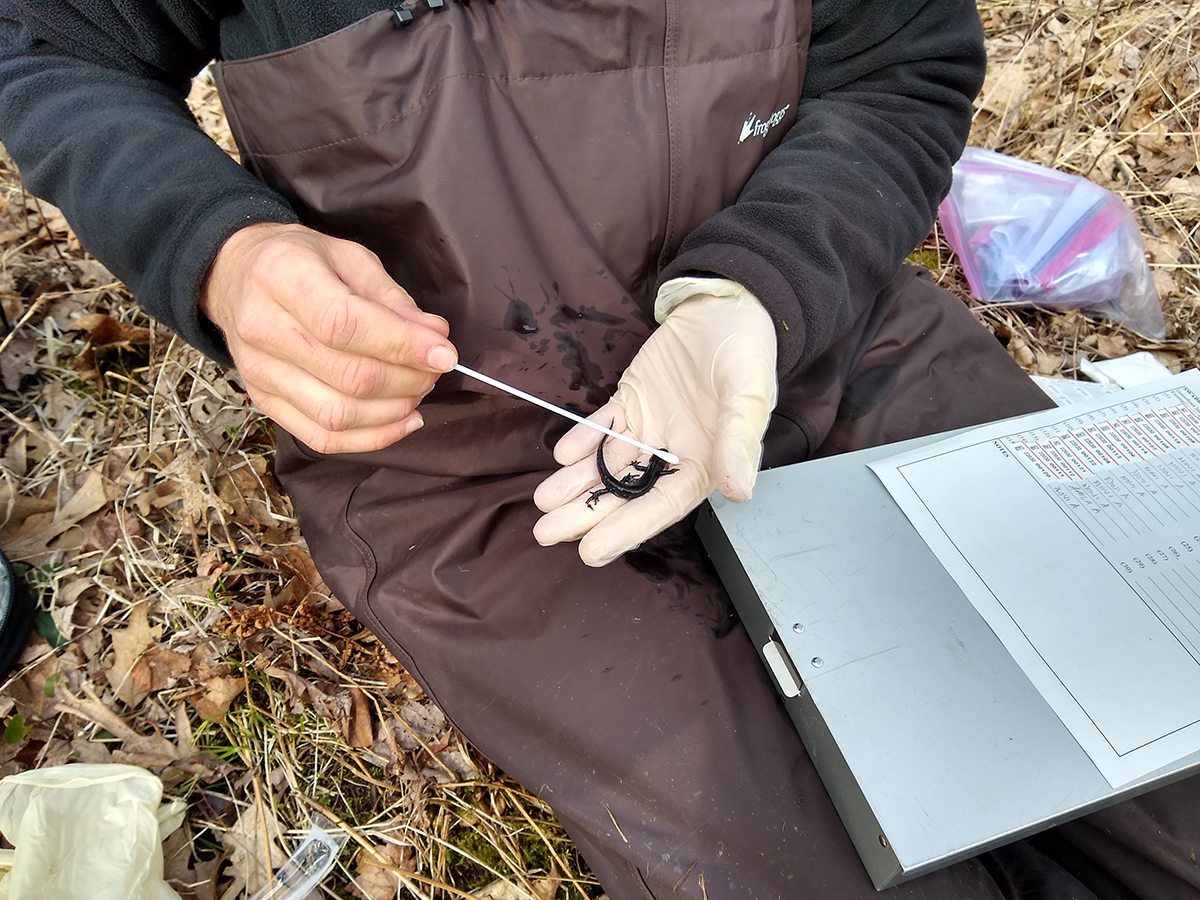
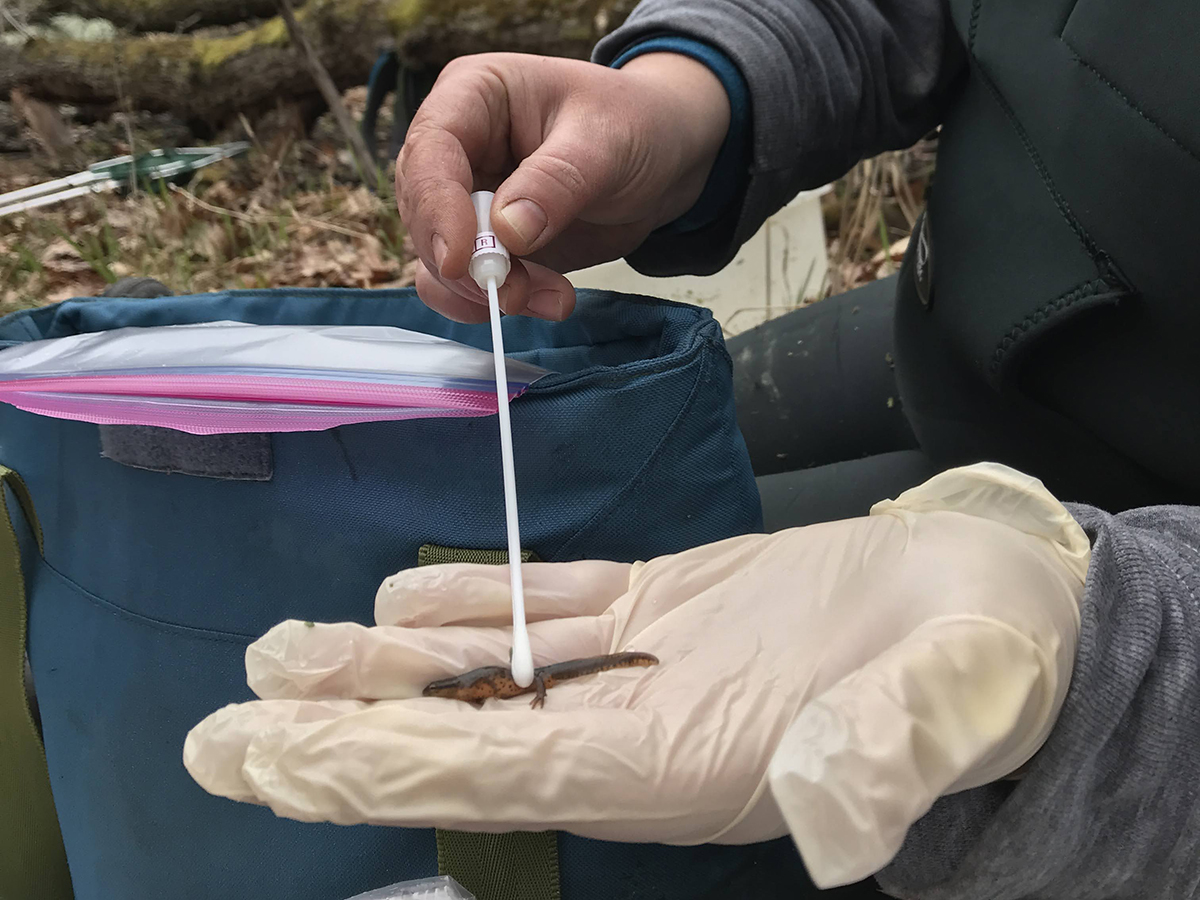
Student Network for Amphibian Pathogen Surveillance (SNAPS) is an experiential learning network that mobilizes students and educators to detect emerging pathogens in amphibians. SNAPS provides supplies, like swabs, for sampling amphibians for pathogens. They also provide optional lesson plans which educators can incorporate into a variety of courses. Educators send their swab samples to the National Wildlife Health Center. There, our collaborators analyze the samples to test for organisms like Bsal and Bd. The Center shares those test results with educators and students. SNAPS test results are also publicized via the Amphibian Disease Portal. Learn more about SNAPS.
| 
|
Join MN SNAPS!
Are you an educator associated with a college or university in Minnesota? Or a leader or volunteer for a wildlife or conservation related organization in the state? Do you want to engage students and members in hands-on research experiences? If so, consider joining the Minnesota SNAPS network! You can fill out this Google Form to share your contact information with us.
Please note that although recruitment into the National SNAPS program may be closed, our initiative in Minnesota is actively recruiting thanks to funding from MAISRC.
Curious about what it might look like to incorporate SNAPS into a classroom setting? Check out the poster that Dr. Jen Lamb (SCSU) presented at the 2024 Minnesota Wildlife Society conference.
Permits to work with amphibians in Minnesota
When you join MN SNAPS, you are added to our MN Dept. of Natural Resources Special Permit for Research with Reptiles and Amphibians. This permit covers our basic activities, like capturing non-threatened or endangered amphibians, swabbing them, and releasing them where they were found. If you want to survey an endangered or threatened species, you will need to obtain specific, separate permits for working with those species.
You will need to obtain additional permits depending on where you plan to sample for amphibians (see below). Obtaining permits can take time (sometimes 3 - 6 weeks), so start the process early and inquire about the progress of your applications with the appropriate persons.
Have questions about obtaining permits? Contact one of our educators and scientists in the state, Dr. Jen Lamb.
Are you planning to sample amphibians in Minnesota at…
- State Parks and Trails?
- Scientific and Natural Areas?
- Wildlife Management Areas or Aquatic Management Areas? You’ll need to contact the fisheries or wildlife office responsible for that WMA.
- MN State Forest, or other MN DNR Forestry-administered lands?
If you aren’t sure who manages the area where you plan to work, you can find additional information via the MN DNR’s Scientific Research website.
Have other questions? Please reach out to our Project Manager Dr. Amy Kinsley.